

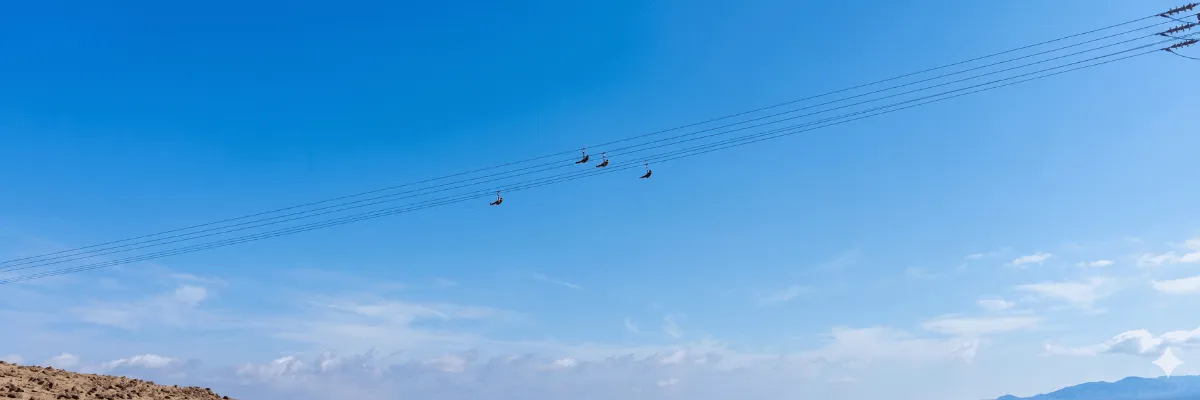



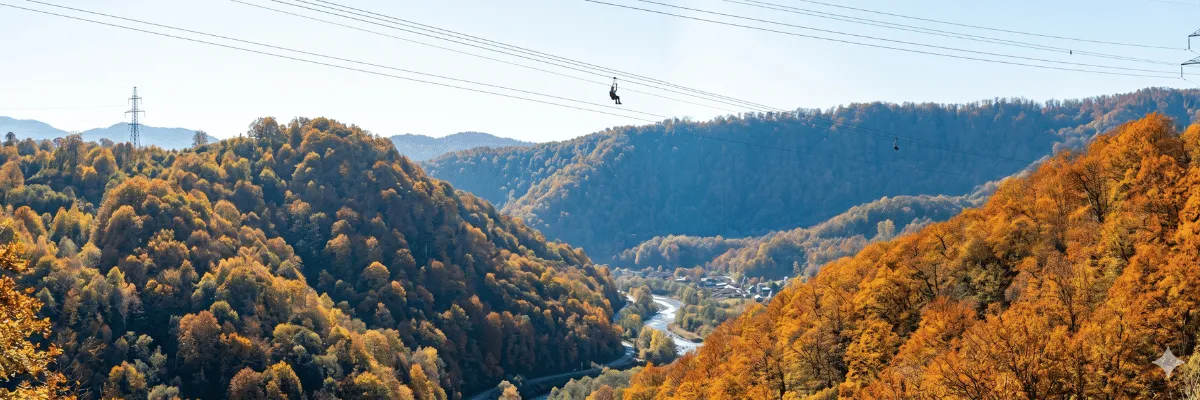


The eight technical pillars of high-performance zipline design
Commercial zipline success depends on rigorous data analysis and risk mitigation at every stage. Our engineering team focuses on the critical markers that define attractions built to perform reliably at scale — season after season.
From first GPS coordinates to certified commissioning
Professional zipline design follows a structured, seven-stage path. Each stage builds on the last — reducing risk, controlling costs, and ensuring that the engineering package your contractor receives is construction-ready and fully certified before ground is broken.
Site evaluation
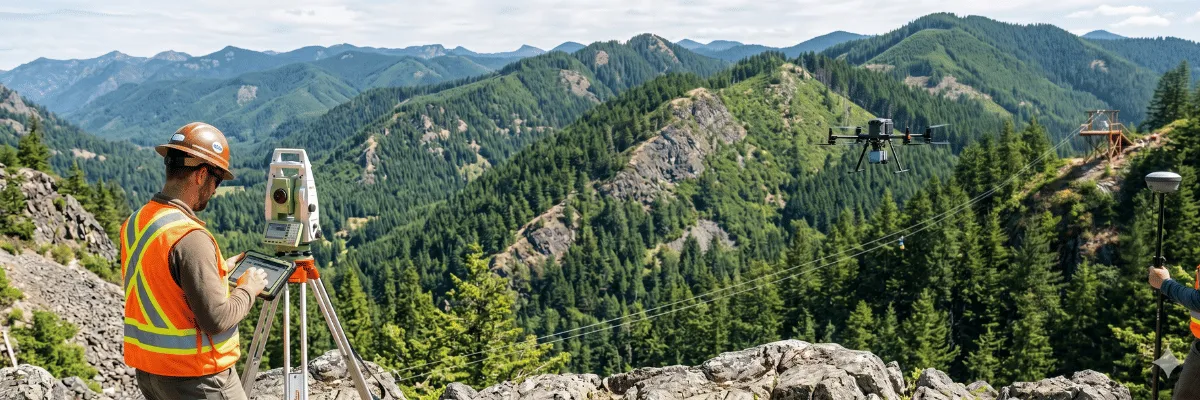
Topography, vegetation, natural features, access conditions, and prevailing wind patterns are assessed against your concept. All that is needed to begin is a pair of GPS coordinates for your proposed start and end points — a topographical survey with elevation data accelerates this stage further.
Feasibility study and simulation
Advanced simulation software builds a virtual model of your zipline and tests it from every angle. The output covers zipline profile analysis, speed and trajectory simulation across the full weight spectrum, initial cable sag and tension estimates, and a go / no-go recommendation. Typical turnaround is five to ten working days.
Structural calculations and component specification
Structural engineers use the feasibility data as their direct input — producing certified analysis of trajectory, tower and anchor loads, braking forces, and all applicable safety factors. A complete component specification list is created: exact cable diameter, trolley models, harnesses, and braking system components are all defined by engineering, not assumption.
Course design and safety integration
Span length, tower placement, height variation, skill-level routing, and natural terrain features are resolved into a complete course design. Safety features — anchoring systems, effective braking and deceleration systems, and staff operational protocols — are engineered into the layout, not retrofitted after the fact.
Installation to industry standard
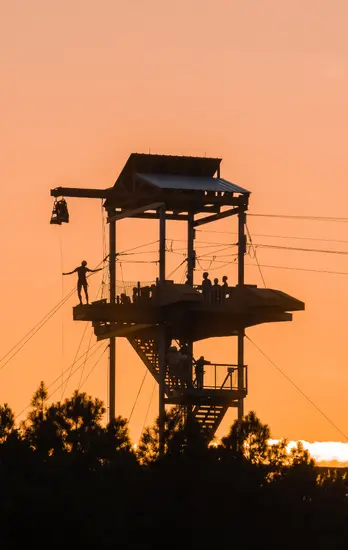
The zipline course, all safety features, and ancillary infrastructure are installed in strict accordance with the engineering package. Installation follows the blueprints for launch and landing towers, anchor systems, and cable rigging — with no deviations without sign-off from the engineering team.
Testing and inspection
The completed course is tested and inspected against the design specifications to confirm correct function, accurate braking performance, and compliance with the applicable safety standards before any guests are permitted to ride.
Maintenance and ongoing support
Regular inspections, prompt repair response, and equipment updates form the operational backbone of a safe and profitable zipline business. Our lifecycle management service provides a structured framework for this ongoing commitment, keeping your attraction performing to its design specification year after year.
The zipline feasibility study: data before capital
How simulation software transforms the design process
Advanced zip line simulation software is the engine behind our feasibility and engineering process. It shifts problem-solving from the construction site — where every change is expensive — to the digital model, where adjustments are fast, iterative, and free. The result is a design that has been stress-tested across dozens of variables before any physical work begins.